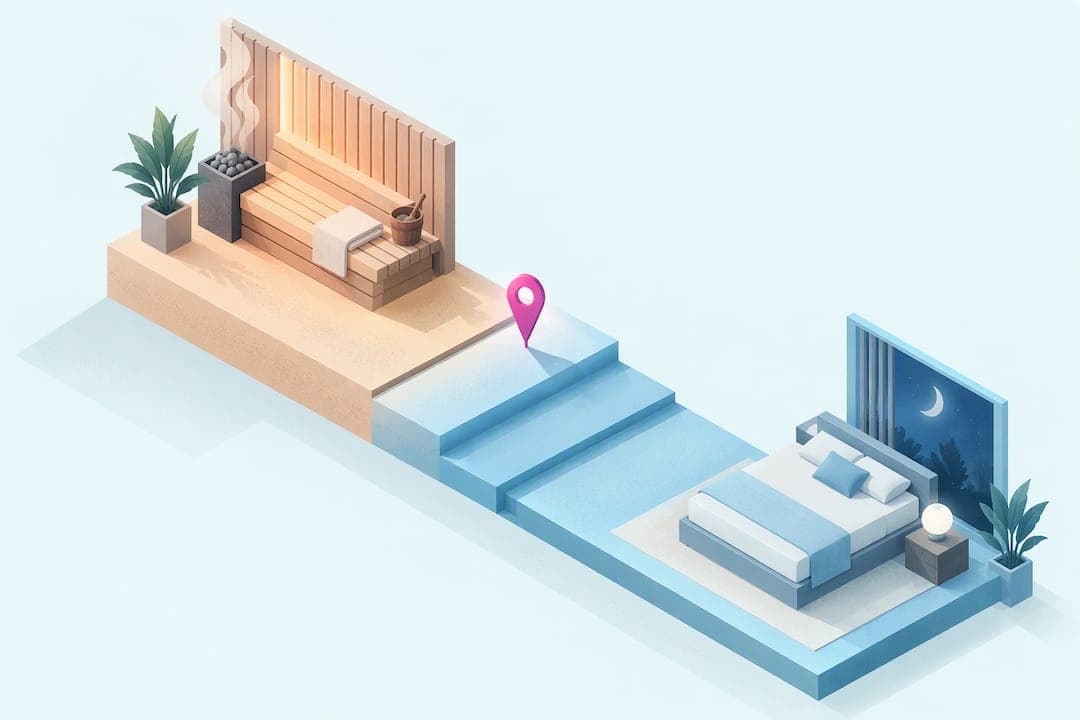
Yes, a sauna can help you sleep, for many people, when the session finishes about 60 to 90 minutes before bedtime. Timing and hydration decide the result. Used too close to lights out, or paired with alcohol, a sauna can backfire and delay sleep instead. A passive body heating meta-analysis and guidance from Singapore's HealthHub both support this timing-first approach, which we incorporate in infrared sauna sessions.
Key Takeaways
Timing sauna sessions about 60 to 90 minutes before sleep enhances sleep quality by supporting the natural cooling process of the body.
| Point | Details |
|---|---|
| Finish sauna early | Complete your sauna session at least an hour before bedtime to allow for core temperature to drop. |
| Control session length | Limit sauna sessions to 15 to 20 minutes at comfortable heat for optimal sleep benefits. |
| Hydrate properly | Rehydrate with water after your session, avoiding excessive fluids right before sleep to prevent waking. |
| Avoid stimulating activities | Skip hot drinks, heavy meals, or vigorous exercise after sauna to facilitate better sleep onset. |
| We recommend Sabaai Sabaai | Our infrared sauna and spa sessions follow the timing principles discussed, supporting a healthy sleep routine. |
Table of Contents
- How sauna heat supports sleep
- Getting the timing right before bed
- Session length and sauna type
- Hydration rules and who should check with a doctor first
- A simple pre-bed sauna routine to try
- How our infrared sauna and spa sessions fit this routine
- What sauna use may do to REM sleep and sleep architecture
- Can a sauna before bed affect your dreams?
- How often to use a sauna as part of an evening routine
- Sauna use alongside insomnia or sleep apnoea
- A cautious take on sauna timing and sleep
- Book a session to test the routine yourself
- FAQ
- Sources
How sauna heat supports sleep
Your body temperature naturally drops in the evening as part of the sleep signal. A sauna session raises core temperature first, then triggers a rebound drop as you cool down afterwards, and that drop appears to be the part that matters for sleep. A passive body heating meta-analysis found that hot baths and showers ending about an hour before bed shortened the time it took participants to fall asleep and increased slow-wave sleep, the deep, restorative stage of the night.
Most of the trials behind this finding used baths or showers, not cabin saunas, so the sauna-specific picture is thinner than the headline suggests. A 2025 meta-analysis of randomised trials looking at sauna use and cardiometabolic outcomes found limited evidence overall and urged caution about broad health claims, sleep included. The practical takeaway still holds: the benefit sits in the cooling phase, not the heat peak. Sitting in a hot cabin at bedtime keeps your core temperature elevated at the exact moment your body wants it falling, which works against you rather than for you.
Getting the timing right before bed

The simplest rule is to finish your sauna session about an hour before you plan to sleep, with a somewhat longer cooling period offering a safer, more conservative target. Practitioner guidance from FoundMyFitness describes a similar pattern, with many people using a sauna around two hours before bed and letting the body cool naturally.
If your bedtime is 22:30, aim to step out of the sauna by around 21:00 to 21:30. For a 23:00 bedtime, finish by 21:30 to 22:00. A short, repeatable sequence makes this easy to test:
- Complete your sauna rounds first, keeping total heat exposure to 15 to 20 minutes.
- Take a quick lukewarm rinse afterwards rather than a hot or very cold shower.
- Sit in a cool room and let your body cool down on its own for the remaining time before bed.
- Avoid reheating activities afterwards, such as a hot drink, a heavy meal or vigorous exercise.
If you are short on time, shorten the session and lower the heat rather than squeezing a full sauna in right before bed. A brief, milder session finished close to bedtime is safer than a long, hot one with no cooling window at all.
Session length and sauna type
For an evening session, 15 to 20 minutes at a comfortable heat is typically enough to trigger the warming and cooling response linked to better sleep onset. Sessions beyond 30 minutes at high heat, close to bedtime, add little extra benefit and increase the time your body needs to cool back down.
Infrared saunas heat the body directly at lower air temperatures than traditional cabins, according to Mayo Clinic, which notes the response resembles mild exercise but says evidence for distinct sleep outcomes remains limited. Because the air feels less intense, your perceived cool-down may take a different amount of time than in a traditional sauna, so adjust your pre-bed window by how your body actually feels rather than the clock alone.
Some people pair sauna heat with a cold plunge or cold shower to speed the cooling process. This can help you fall asleep sooner, but it is stimulating for others and adds cardiovascular demand, so it suits healthy, experienced users more than a first attempt at a bedtime routine.
Hydration rules and who should check with a doctor first
Sweating in a sauna costs you fluid, and replacing it sensibly matters as much as the timing itself. Drink according to thirst and how much you have sweated, rather than forcing a fixed amount.
- Avoid a large volume of fluid right before bed, since it raises the odds of waking to urinate.
- Skip alcohol around sauna sessions, as it worsens dehydration and fragments sleep.
- Limit caffeine in the hours beforehand so it does not stack with the stimulating effect of the heat.
- Seek medical advice first if you have heart disease, take blood pressure medicines, are pregnant or are an older adult, since sauna use adds cardiovascular and fluid demands these groups should manage individually.
- Stop immediately if you feel dizzy, faint, notice heart palpitations or chest pain.
These cautions mirror general guidance on sauna risks and hydration, which flags the same higher-risk groups and the same advice to rehydrate without overdoing it near bedtime.
A simple pre-bed sauna routine to try
A short, repeatable plan makes it easier to judge whether sauna timing works for you:
- 90 minutes before bed: a full 15 to 20 minute session, then a lukewarm rinse.
- 60 minutes before bed: a shorter 10 to 15-minute session if you started later than planned.
- 30 minutes before bed: skip the sauna and move straight to wind-down, since there is no longer enough cooling window.
Afterwards, rinse off in lukewarm water, rehydrate with 250 to 500 millilitres of water within the following hour, dim the lights, step away from screens and set your bedroom temperature a little cooler than usual. If you wake during the night feeling too warm, shorten your next session and give yourself more cooling time before getting into bed.
Pro Tip: Track your bedtime and how quickly you fall asleep for a week while testing different cool-down windows, so you find your own number inside the 60 to 90 minute range.
How our infrared sauna and spa sessions fit this routine
We have run infrared sauna and spa sessions for many years, and the timing principles above map directly onto how a session actually unfolds. Our infrared sauna sessions run for a set period, giving you a clear stopping point to plan your cooling window around, and our private Hinoki onsen bath offers a gentler, water-based alternative to pair with or swap in for a drier heat session. Staff can talk you through session length and point you to a quiet space to cool down afterwards, which supports the cooling phase this guide keeps coming back to. Client feedback reflects the comfort and care we bring to each visit, though we always treat a spa session as one part of a broader sleep routine rather than a fix on its own.
What sauna use may do to REM sleep and sleep architecture
Sleep architecture refers to how your night is structured across light sleep, deep slow-wave sleep and REM sleep, the stage linked to dreaming and memory processing. The strongest evidence for passive heating points to an increase in slow-wave sleep, the deep stage that supports physical recovery, when a hot bath or shower ends in the hour or two before bed, according to the passive body heating meta-analysis.
Evidence specific to REM sleep and sauna use is thinner. The same meta-analysis focused mainly on sleep onset and slow-wave sleep rather than detailing REM changes, and the 2025 randomised-trial meta-analysis found limited broader evidence for sauna as a treatment, which argues for modest, specific claims rather than a blanket statement about every sleep stage. The honest summary is that a well-timed sauna session may help you fall asleep faster and spend more time in deep sleep, while its effect on REM sleep specifically is not well established in the current research.
Core temperature itself plays a role in how your sleep stages unfold through the night, since your body relies on a falling temperature curve to move smoothly between stages. A sauna timed too close to bed keeps that curve elevated for longer, which can delay the whole sequence rather than disrupt one stage in isolation. That is one more reason the cooling window matters more than the heat exposure itself.

Can a sauna before bed affect your dreams?
There is no solid research tying sauna use directly to dream content or dream recall, so any claim about sauna sessions producing more vivid or unusual dreams goes beyond what the evidence supports. What the research does support is a link between deeper slow-wave sleep and more consolidated, less fragmented sleep overall, which some people notice as feeling more rested rather than as a change in what they dream about.
Sleep quality, in the sense of fewer awakenings and a quicker drop into deep sleep, is where the passive heating evidence is strongest. If you time your session well and avoid the common mistakes, a warmer, more settled night is the realistic outcome to expect rather than a change in dream intensity. Anyone looking for a dream-specific effect from sauna use will not find it backed by the current evidence, and we would rather say that plainly than overstate it.
How often to use a sauna as part of an evening routine
There is no fixed frequency that research has settled on for evening sauna use and sleep, so the practical approach is to treat it as an adjunct you test gradually rather than a nightly requirement. Two to three evening sessions a week is a reasonable starting point for most healthy adults, giving your body recovery time between sessions while still letting you judge whether the routine helps.
Using a sauna every single night, particularly at high heat, raises the cumulative hydration and cardiovascular demand covered earlier, without clear evidence that more frequent use improves sleep further. If a few sessions a week make a noticeable difference to how quickly you fall asleep, that is a reasonable sign the routine is working for you. If you notice no change after a few weeks, the sauna may simply not be the lever that moves your sleep, and other wind-down habits are worth prioritising instead.
Sauna use alongside insomnia or sleep apnoea
For people with mild, occasional sleep difficulty, a well-timed sauna session sits comfortably alongside the general wind-down advice in this guide. For insomnia that is persistent or significantly affecting daytime function, HealthHub is clear that professional assessment matters more than any single self-care habit, and a sauna should be treated as one part of a consistent routine rather than a replacement for that assessment.
Sleep apnoea adds a separate layer of caution. The condition already involves disrupted breathing and overnight oxygen dips, and the cardiovascular load of sauna heat, on top of an existing breathing disorder, is a reason to check with a doctor before adding evening sauna sessions to your routine. The same applies to anyone on medicines that affect blood pressure or fluid balance, since sauna heat interacts with both. None of this rules sauna use out for people managing these conditions, but it does mean the usual advice to "just try it and see" does not apply in the same way, and a conversation with a clinician should come first.
A cautious take on sauna timing and sleep
Sauna before bed works best as a small, testable addition for healthy adults dealing with mild, occasional sleep difficulty, not as a cure for serious sleep problems. It belongs alongside the basics: a consistent bedtime, screens off beforehand and a cool bedroom, not instead of them. If sleep trouble persists despite good habits, see a clinician before leaning further on heat as a fix.
— Sabaai Sabaai
Book a session to test the routine yourself
If you would like to try this timing-first approach in a supervised setting, our infrared sauna sessions run for a set length, making it easy to plan your 60 to 90 minute cooling window around them, and our private Hinoki onsen bath offers a gentler alternative if you prefer water-based heat. Ask about session length and where to cool down afterwards, so your visit lines up with the guidance above. You can view current treatments and book directly through our Wisma Atria menu.
This article is general information, not a substitute for advice from a qualified doctor. Consult a qualified healthcare professional about your own circumstances before acting on anything here.
FAQ
Is it better to go to the sauna before bed?
For many people, yes, provided the session ends 60 to 90 minutes before sleep rather than right before lights out. Finishing earlier gives your body time to complete the cooling phase that the passive body heating meta-analysis links to faster sleep onset and more slow-wave sleep.
What is the 3:2:1 rule before bed?
This is a general wind-down guideline rather than a sauna-specific one: stop eating three hours before bed, stop working two hours before bed, and stop screens one hour before bed. It pairs naturally with sauna timing, since both aim to give your body a calm, cooling stretch before you try to sleep.
What do 30 minutes in the sauna do?
Thirty minutes at high heat raises core temperature more than a shorter session and extends the time your body needs to cool back down afterwards. For an evening session, this is longer than most timing guidance recommends, since it pushes the cooling phase closer to, or past, your intended bedtime.
What do 20 minutes in the sauna do for your body?
A 20 minute session is a typical evening length, long enough to raise core temperature and trigger the rebound cooling that supports sleep onset, without extending the cool-down window too far. This matches the 15 to 20 minute range recommended for pre-bed use in this guide.
Sources
- Passive body heating meta-analysis (Sleep Medicine Reviews)
- HealthHub sleep guidance (Singapore HealthHub)
- Do infrared saunas have any health benefits? — Mayo Clinic
- FoundMyFitness Q&A (Dr Rhonda Patrick)
- 2025 randomized-trial meta-analysis (cardiometabolic outcomes)