Massage can genuinely help many people with insomnia, particularly relaxation-style massage and targeted acupressure done in the hours before bed. Try a gentle 30 to 45 minute relaxation massage, or a 10 to 15 minute self-acupressure sequence, roughly one to two hours before sleep. The sections below walk through the clinical evidence, the techniques that work best, and exactly how to do them.
TL;DR:
- Gentle, rhythmic massages like relaxation, tuina, or short courses of Thai massage produce measurable improvements in sleep quality and efficiency.
- Timing massages one to two hours before bed or doing brief self-acupressure routines within 30 minutes of sleep enhances their effectiveness.
- Deep tissue and vigorous massage techniques close to bedtime tend to increase arousal and should be avoided for better sleep.
- Consistent use of calming massage techniques over days or weeks is more beneficial for chronic insomnia than infrequent, intensive sessions.
- Self-acupressure points such as An Mian and HT7 can support sleep when used regularly, with pressure applied for 30 to 60 seconds on each side.
Table of Contents
- Does massage for insomnia have research behind it?
- Which type of massage works best for insomnia?
- What acupressure points help with insomnia?
- When should you schedule massage for better sleep?
- Is massage safe if you have insomnia?
- Where Sabaaisabaai fits into evidence-based sleep support
- What actually moves the needle on sleep
- Book a session built around better sleep, not just sore muscles
- Sources
- FAQ
Does massage for insomnia have research behind it?
Massage sits on firmer scientific ground than most sleep remedies sold as "natural". A 2024 systematic review and meta-analysis of 23 randomised controlled trials covering 1,780 patients found tuina massage reduced Pittsburgh Sleep Quality Index scores by a mean difference of 2.34 points and Athens Insomnia Scale scores by 2.10 points. It also raised levels of serotonin (5-HT), the neurotransmitter tied to sleep regulation, and produced an odds ratio of 4.12 for treatment success compared with other therapies.
Objective sleep testing backs this up. A 2025 home-based sleep study measured people with polysomnography after a single 45 minute relaxation massage before bed. Sleep efficiency rose notably, by several minutes and a measurable percentage, compared with a sham massage and a no-treatment control. The trial protocol, registered as NCT06781866, used overnight polysomnography rather than self-reported diaries, which matters because subjective sleep ratings are notoriously unreliable.
Traditional Thai Massage has its own trial data. A 2022 randomised study gave adults with sleep problems three 90-minute sessions across one week. Sleep disturbance scores dropped from 45.47 in the control group to 31.63 in the massage group, and sleep effectiveness rose from 53.47 to 70.73, both with p values under 0.001.
Three mechanisms likely explain these gains:
- Parasympathetic activation slows heart rate and lowers blood pressure, shifting the body out of alert mode.
- HPA-axis modulation appears to dial down the stress hormone cascade that keeps cortisol elevated at night.
- Neurotransmitter shifts, including the 5-HT rise noted above, may support the biochemical pathway into deeper sleep.
None of this makes massage a proven cure. Sample sizes in most trials are modest, protocols vary widely between studies, and the tuina meta-analysis itself flags inconsistent study quality. Treat the evidence as a genuinely promising signal, not a guarantee.
Which type of massage works best for insomnia?
Not all massage styles suit a bedtime routine, and picking the wrong one can leave you more wired than when you started.
Relaxation massage (the Swedish-style approach used in most of the sleep trials) relies on slow, sustained strokes: effleurage (long gliding movements), gentle petrissage (kneading), and light vibration. These techniques are built to lower arousal rather than work deep tissue, which is exactly why the polysomnography trial used a 45 minute relaxation protocol and saw measurable gains in sleep efficiency.
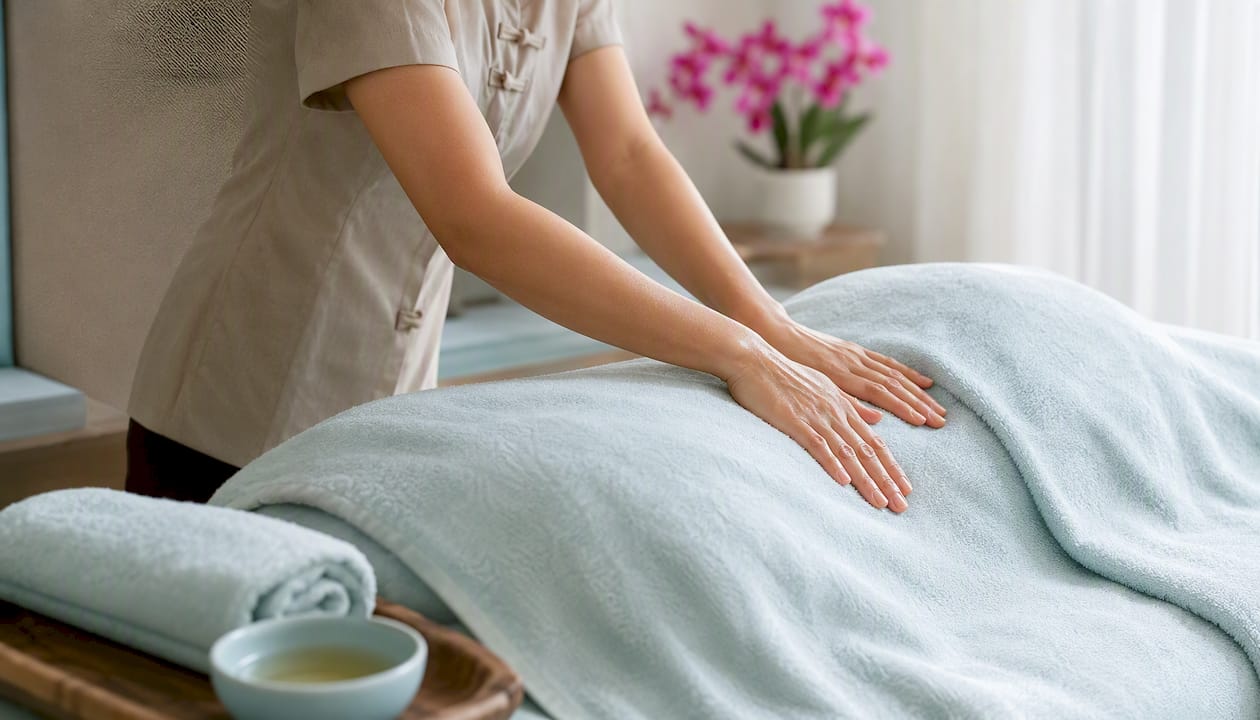
Tuina, a form of Chinese therapeutic massage, showed the strongest data of any single technique in the 2024 meta-analysis, often delivered as a course over several sessions rather than a one-off treatment.
Traditional Thai Massage sits in between. It combines rhythmic pressure with assisted stretching, and the 2022 trial suggests a short course of three sessions over a week produces measurable improvement in sleep disturbance. A single Thai massage before bed can still help you unwind, but the trial evidence points to a short course for sustained results.
What to avoid: deep-tissue work, vigorous sports massage, or anything involving intense trigger-point release close to bedtime. These techniques increase blood flow and can leave muscles sore and the nervous system activated for hours, the opposite of what you want before sleep.
When booking a session aimed at better sleep, be specific with your therapist:
- Ask for medium to light pressure, not deep tissue.
- Request focus on the neck, shoulders, and feet, where tension tends to concentrate.
- Book a 45 to 60 minute slot rather than a quick 30 minute add-on.
Pro Tip: Tell your therapist upfront that the goal is sleep, not muscle recovery. That single sentence changes the pressure, pacing, and areas they'll prioritise.
What acupressure points help with insomnia?
You do not need a therapist to get some of these benefits. A short self-massage and acupressure sequence, done consistently, can be just as practical as booking a session, especially on nights when you cannot get to a spa.
Several points recur across self-acupressure guidance from clinical resources and traditional practice:
- An Mian ("peaceful sleep") sits behind the ear, in the depression between the mastoid bone and the neck muscle. Press with your index or middle finger for 30 to 60 seconds, using firm but comfortable pressure, then repeat on the other side.
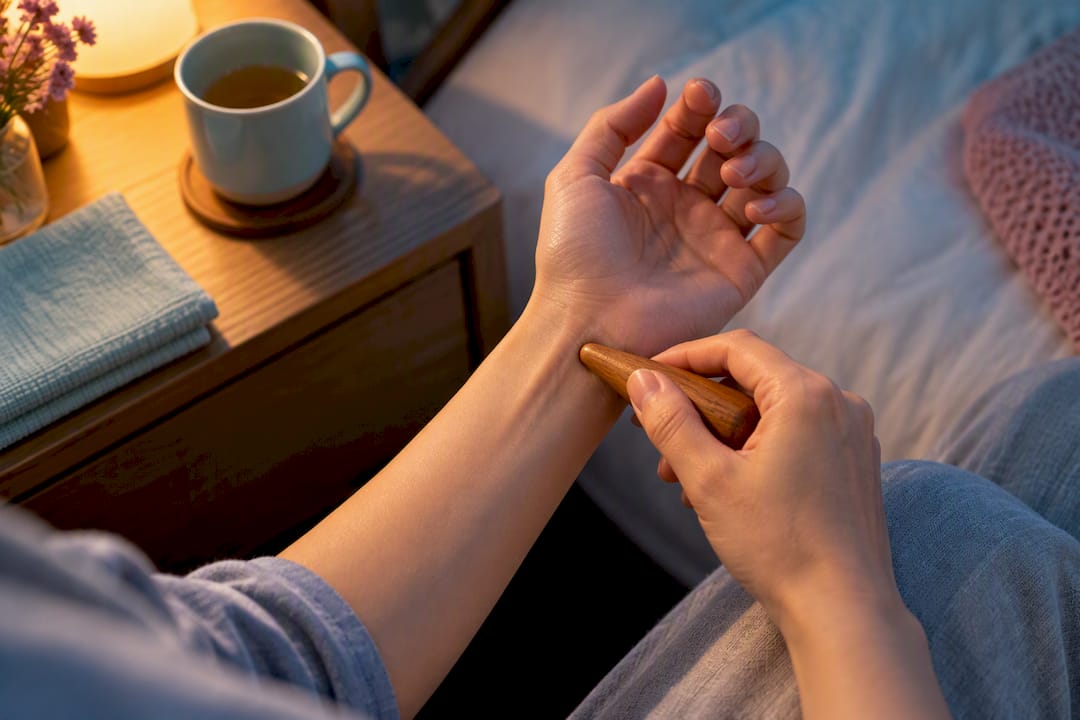
- HT7 (Spirit Gate) is on the wrist crease, in line with the little finger, on the pinky side of the tendon. Massage in small circles for 30 seconds per wrist.
- SP6 (Three Yin Intersection) sits about four finger-widths above the inner anklebone, along the back edge of the shinbone. Hold steady pressure for 30 to 60 seconds and repeat up to three times. Therapists generally advise against strong pressure here during pregnancy.
- LV3 (Liver 3) is on the top of the foot, in the groove between the big toe and second toe. Press firmly for 30 seconds on each foot.
- Bubbling Spring (Kidney 1) sits in the centre of the sole, just below the ball of the foot. Use your thumb to apply firm circular pressure for a minute on each foot.
- Wind Pool points sit at the base of the skull, either side of the spine. Use both thumbs to press upward and inward for 30 seconds.
A full 10 to 15 minute routine might run: start seated, work An Mian and Wind Pool for two minutes, move to both wrists for HT7, then finish lying down working SP6, LV3, and Bubbling Spring on each foot. Finish with slow effleurage strokes up the shins and forearms to keep the nervous system settled, a sequence therapists use to maintain parasympathetic tone after targeted point work.
A warm compress on the neck or shoulders beforehand can help muscles release faster. If you use massage oil, a small amount of lavender or chamomile-scented carrier oil supports the routine without overwhelming the senses. Keep it light. This is meant to relax, not exfoliate.
Pro Tip: If your fingers tire quickly, use a wooden massage tool or even the eraser end of a pencil for the smaller points like HT7. The pressure matters more than which body part delivers it.
A few adaptations matter. If you're pregnant, avoid firm pressure on SP6 specifically. If you have joint pain or arthritis, reduce pressure and duration on affected points. Anyone with sensitive skin should patch-test any oil 24 hours before full use.
When should you schedule massage for better sleep?
Timing shapes the outcome as much as technique does. Professional sessions work best scheduled one to two hours before bed, giving your body time to settle rather than transitioning straight from table to pillow. A quick 10 to 15 minute self-massage routine, by contrast, works fine done immediately before lights out since the pressure and pace are already gentle.
For persistent insomnia, consider a short course rather than a single session. Trial data on Traditional Thai Massage used three 90 minute sessions across one week; that pattern gives your body repeated exposure to the parasympathetic shift before you judge whether it's working.
A few scheduling habits worth building in:
- Pair massage with a consistent wake time, not just a fixed bedtime.
- Keep the bedroom dark and cool, ideally between 16 and 19°C, regardless of what massage technique you use.
- Cut screens for 30 to 60 minutes before your self-massage routine, since blue light works against everything the massage is trying to achieve.
- If time is tight, a 10 minute foot and hand routine most nights beats an occasional hour-long session.
Is massage safe if you have insomnia?
Massage is low-risk for most people, but it is not risk-free, and skipping the caveats does nobody any favours. Mild soreness the day after a firmer session is common and usually resolves with water and gentle movement.
Certain conditions rule massage out, at least without medical clearance first:
- Suspected deep vein thrombosis or blood clots.
- Uncontrolled bleeding disorders or recent surgery.
- Active fever or infection.
- Pregnancy, where certain pressure points and positions need adjusting.
Insomnia itself sometimes signals something bigger than tense muscles. See a doctor if you notice severe daytime impairment, loud snoring with breathing pauses (a possible sign of sleep apnoea), or thoughts of self-harm. Massage supports sleep; it does not replace a clinical diagnosis. Always tell your therapist about medications, chronic conditions, or pregnancy before the session starts.
Where Sabaaisabaai fits into evidence-based sleep support
A wellness spa has extensive experience delivering Thai-inspired therapeutic massage centered on gentle, rhythmic techniques similar to those described by sleep trials. Its Traditional Thai Massage and aromatherapy oil sessions map directly onto the relaxation and Thai massage protocols covered above, while herbal compress massage and hot stone treatments add warmth-based relaxation that complements the acupressure work you can do at home. For readers who want the full wind-down experience, private Hinoki onsen baths and infrared sauna sessions extend the same parasympathetic-calming principle beyond the massage table, in a range of spa formats suited to different sleep needs.
What actually moves the needle on sleep
The evidence here is more solid than most wellness claims get credit for, but it is also narrower than the marketing around "massage for sleep" usually implies. The strongest results, in both the tuina meta-analysis and the polysomnography trial, come from gentle, rhythmic, low-intensity work, not the deep-tissue sessions people often assume are more "effective" because they hurt more. That assumption is backwards. Pressure and outcome are not the same axis.
The gap in most consumer advice is timing. Plenty of guides list pressure points without saying when to use them, and a wrist massage at 3pm does nothing for insomnia at 11pm. The one to two hour window before bed for professional sessions, and immediate use for the shorter self-massage sequences, is where the trial protocols actually landed, and it is worth respecting rather than treating as a footnote.
If you take one thing from the research, take this: consistency over intensity. A short course of sessions, or a nightly ten-minute routine, will do more for chronic insomnia than one deep, occasional massage ever will.
— Ivy
Book a session built around better sleep, not just sore muscles
Sabaaisabaai gives you a bookable route to the exact techniques this article recommends, without needing to master pressure points yourself or guess what "gentle relaxation massage" actually feels like. Its therapists are trained in Traditional Thai Massage, aromatherapy, and herbal compress work, so you can simply ask for lighter pressure with a focus on the neck, shoulders, and feet, the same areas the self-massage routine above targets.
At the Boat Quay location, Traditional Thai Massage runs from $88 to $168 and Aromatherapy Massage from $98 to $178, while the Wisma Atria outlet also offers Hot Stone Massage and a private Hinoki Onsen Bath for a fuller wind-down evening. If you're unsure which treatment suits your sleep concerns, mention it when booking. The team can point you towards the gentler formats rather than a deep-tissue session that works against your goal.
Sources
- Effect of tuina on sleep quality, psychological state and neurotransmitter level in patients with insomnia: a systematic review and meta-analysis
- The Effect of Traditional Thai Massage on Quality of Sleep in Adults with Sleep Problem
- The impact of relaxation massage prior to bedtime on sleep quality and quantity in people with symptoms of chronic insomnia: a home‑based sleep study
This article is general information, not a substitute for advice from a qualified doctor. Consult a qualified healthcare professional about your own circumstances before acting on anything here.
FAQ
What type of massage is best for insomnia?
Gentle relaxation massage, using techniques like effleurage and light petrissage, has the strongest trial support, alongside tuina and Traditional Thai Massage delivered as a short course. Deep-tissue or vigorous sports massage should be avoided close to bedtime since it raises physiological arousal rather than lowering it.
Can getting a massage help with insomnia?
Yes, for many people. A 2025 randomised trial found a single 45 minute relaxation massage before bed improved objective sleep efficiency by about 9.19 minutes, measured on polysomnography rather than self-report. Results vary between individuals, and massage works best alongside good sleep hygiene, not as a standalone fix.
Where is the pressure point for insomnia?
Several points help, but An Mian, located behind the ear in the hollow near the mastoid bone, and HT7 on the wrist crease near the little finger are among the most commonly used. Both respond to 30 to 60 seconds of steady, firm pressure repeated on each side of the body.
What is the 3-3-3 rule for insomnia?
The 3-3-3 rule is a grounding technique for anxious wakefulness, involving naming three things you see, three sounds you hear, and moving three body parts to interrupt racing thoughts. It is not a massage-specific method, though pairing it with a short acupressure routine can reinforce the same calming effect.
How much does a sleep-focused massage cost at Sabaaisabaai?
Traditional Thai Massage at the Boat Quay outlet runs from $88 to $168, while Aromatherapy Massage ranges from $98 to $178. Prices at the Wisma Atria location differ slightly, so check the specific menu before booking.