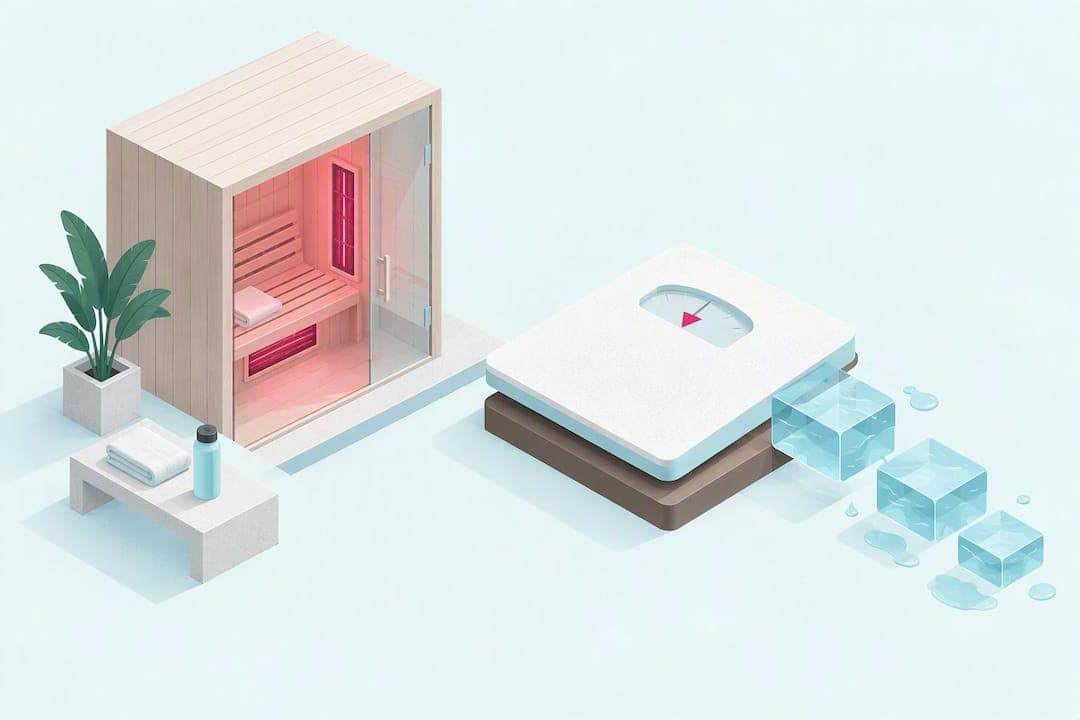
Infrared saunas do not cause meaningful, sustained fat loss. Clinical guidance from Mayo Clinic and Cleveland Clinic confirms that the drop you see on the scale after a session is water, not fat. Singapore's HealthHub backs this with hydration guidance, and at Sabaai Sabaai we treat infrared sauna as a relaxation and recovery tool, not a weight control plan.
Key Takeaways
Infrared saunas promote relaxation and recovery but do not cause meaningful, sustained fat loss as weight drops are primarily due to water loss, not fat burning.
| Point | Details |
|---|---|
| Infrared heat induces exercise-like responses | Infrared saunas raise core temperature and heart rate similarly to moderate exercise, but do not directly burn fat. |
| Water weight, not fat, drops after sessions | Scale weight reduction post-sauna is from hydration loss, which returns after rehydration. |
| Calorie estimates vary widely and are unreliable | Most online calorie calculators for sauna use are based on protocols that do not match typical infrared sessions. |
| Sauna use should complement a healthy routine | For weight loss, combine regular exercise and diet, using sauna for recovery and stress relief only. |
| Sabaai Sabaai promotes sauna as part of recovery care | Sabaai Sabaai offers infrared sauna sessions focused on muscle recovery and relaxation, not weight loss. |
Table of Contents
- How infrared heat works and why your body reacts
- What the research shows: calorie estimates and measured mass changes
- Interpreting post-sauna weigh-ins and hydration
- Safety, contraindications and warning signs
- A practical, evidence-based routine if weight loss is your goal
- How Sabaai Sabaai offers infrared sauna to guests
- Author note: a balanced view from the spa
- Infrared sauna and complementary treatments at Sabaai Sabaai
- Sources
- FAQ
How infrared heat works and why your body reacts
Infrared saunas heat your body directly with radiant light rather than warming the air around you. Traditional saunas push air temperatures to 70 to 90°C. Infrared cabins typically run cooler, often between 45°C and 60°C, while still producing a strong sweat response because the infrared wavelengths penetrate tissue and raise your core temperature from within.
That physiological reaction looks a lot like moderate exercise. Your heart rate climbs, blood vessels dilate, and you sweat. Mayo Clinic notes that infrared saunas cause exercise-like responses such as sweating and a raised heart rate, even at these lower air temperatures. But raising your heart rate for 20 or 30 minutes while sitting still is not the same as burning fat through movement.
Several misconceptions keep this myth alive:
- Sweating heavily feels like a workout, but sweat is water loss, not fat loss.
- A higher heart rate during a sauna session resembles cardio exertion without the muscular work that drives calorie burn.
- Scale weight dropping after a session gets mistaken for body fat reduction, when it is almost always fluid.
A 2019 dry sauna study measured around 73 calories burned in the first 10-minute interval and over 134 calories in the final interval, according to research published in PMC. The same protocol produced a mean 0.65 kilogram drop in body mass, which reflects fluid loss rather than fat loss. These numbers came from a specific sauna protocol and participant group, so they cannot be applied to every infrared session.
What the research shows: calorie estimates and measured mass changes

The clearest data point available comes from the same 2019 study: four 10-minute dry sauna sessions at 90 to 91°C, with breaks between them, produced a noticeable body mass loss in young, overweight men, alongside the calorie estimates noted above, as reported in PMC. That is a traditional dry sauna, not an infrared cabin, and the sample was narrow: young, overweight men under a controlled repeated-exposure protocol.
This matters because energy expenditure during passive heat exposure correlates with body mass and surface area. Larger individuals tend to expend more energy sitting in heat, but they are also more prone to dehydration, which complicates any attempt to read the scale as a fat-loss marker.
- Calorie figures from one study cannot be turned into a universal number for a 45-minute infrared session.
- Protocols vary by temperature, duration and break structure, which changes the result each time.
- Body composition, fitness level and hydration status all shift the outcome, even within the same study population.
| Study detail | Figure |
|---|---|
| Sauna type | Dry sauna, 90 to 91°C |
| Protocol | Four 10-minute sessions with breaks |
| Calories, first interval | Around 73 |
| Calories, final interval | Over 134 |
| Mean body mass change | 0.65 kg loss |
Online calculators that promise 400 to 600 kilocalories per 30-minute session are extrapolating from protocols and populations that do not match most spa visits. Treat any such figure with scepticism unless it is tied to a named study with a matching sauna type and duration.
Interpreting post-sauna weigh-ins and hydration
Step on the scale right after a sauna session and you will likely see a lower number. That number is fluid, not fat, and it returns once you rehydrate. Cleveland Clinic's commentary on sauna benefits states plainly that this kind of weight drop is dehydration, not evidence of durable fat loss.
Follow these steps after a session:
- Skip the scale for at least a few hours, since the number will not reflect anything meaningful yet.
- Drink water steadily rather than all at once, replacing what you sweated out.
- Check your urine colour: pale and close to odourless signals good hydration, following guidance from HealthHub.
- Avoid alcohol or caffeine immediately after, since both work against rehydration.
- Track progress with waist measurement or body composition trends over weeks, not single sessions.
Pro Tip: Weigh yourself at the same time each morning, before any sauna or exercise session, so your trend line reflects real change rather than fluid swings.
Safety, contraindications and warning signs
Infrared saunas suit most healthy adults, but some groups need medical advice before stepping in. People with cardiac disease, pregnant women, those with kidney disease, anyone on fluid restriction, and people taking medications that affect blood pressure or hydration should check with a clinician first.
Stop a session immediately if you notice any of the following:
- Chest pain or tightness.
- Severe dizziness or light-headedness.
- Fainting or near-fainting.
- Confusion or disorientation.
- Severe nausea.
For anyone in a higher-risk group who still wants to try infrared sauna, shorter sessions, lower temperature settings and staff monitoring reduce the risk considerably. HealthHub's dehydration guidance recommends particular caution for people with coronary disease and anyone on a restricted fluid intake, since standard rehydration advice may not apply to them.
A practical, evidence-based routine if weight loss is your goal
Infrared sauna works as an adjunct, never a substitute, for the two things that actually drive weight loss: a caloric deficit and regular movement. No session length or frequency changes that equation.
If you want to build sauna into a routine that supports your broader goals:
- Prioritise your nutrition and exercise plan first, and treat sauna sessions as recovery, not a calorie-burning substitute.
- Use short post-exercise sessions, around 10 minutes, two to three times a week, rather than daily long sessions.
- Rehydrate fully between sessions and avoid scheduling back-to-back sauna days without recovery time.
- Track body composition or waist measurement monthly, since this is a far more reliable signal than daily scale weight.
A 2025 randomised study of post-exercise infrared sauna use in female athletes, 10 minutes at 50°C three times weekly for six weeks, found no significant hypertrophy benefit, though it reported some improvements in neuromuscular performance measures. That supports sauna as a recovery aid rather than a tool for changing body composition.
Pro Tip: Pair your sauna session with a massage or stretching routine afterwards. Muscles are warm and loose, which makes manual recovery work more effective.
How Sabaai Sabaai offers infrared sauna to guests
Sabaai Sabaai has operated for 16 years, and we offer infrared sauna sessions as part of a relaxation and recovery amenity alongside massage and private onsen baths. We frame it honestly with guests: it supports recovery and stress relief, not weight loss on its own.
Staff ask about relevant health conditions before a first session and keep sessions shorter for new guests while they gauge their response to the heat. We remind every guest to rehydrate afterwards and often pair sauna time with a herbal compress massage or a soak in our Hinoki onsen bath, since the combination supports muscle recovery better than heat alone.
Author note: a balanced view from the spa
Infrared sauna earns its place in a recovery routine, not a weight-loss plan. The evidence, from the calorie estimates in small studies to the clinical guidance from Mayo Clinic and Cleveland Clinic, points the same way: expect relaxation and muscle recovery, not fat loss.
We recommend combining sauna with regular exercise and a sensible diet if weight loss is genuinely your goal, and using sauna sessions for what they do well: easing tension and supporting recovery after training. Ask our staff about safe session lengths and hydration practices before your first visit.
— Sabaai Sabaai
Infrared sauna and complementary treatments at Sabaai Sabaai
Our infrared sauna sessions run at 65.40 SGD and work best as part of a recovery routine rather than a standalone weight-loss plan. Guests often combine a session with a massage or body treatment at our Wisma Atria menu for a fuller recovery visit.
Here is how guests typically build a session around sauna:
- Add a hot stone massage for muscle recovery after a workout.
- Pair sauna with a steam room session for a complete heat-therapy visit.
- Book a Hinoki onsen bath afterwards to extend the relaxation.
Sauna supports recovery and stress relief best when paired with regular exercise and a sensible diet. Book your session through our Wisma Atria menu to see current availability.
Sources
- Correlations between repeated use of dry sauna and physiological parameters (PMC)
- Effects of repeated use of post‑exercise infrared sauna on neuromuscular performance and muscle hypertrophy (PubMed)
- Mayo Clinic: Do infrared saunas have any health benefits?
- Cleveland Clinic: Sauna benefits
- HealthHub: Dehydration — risk, symptoms and prevention
FAQ
Do infrared saunas help you lose weight?
No, not in a meaningful or lasting way. Mayo Clinic and Cleveland Clinic both state that post-sauna weight drops reflect water loss, and sustained fat loss requires a caloric deficit achieved through diet and exercise.
How many calories do you burn in an infrared sauna for 45 minutes?
There is no reliable universal figure for a 45-minute infrared session. The closest available data comes from a dry sauna study that measured around 73 calories in the first 10-minute interval and over 134 calories in the final interval, according to PMC, using a different sauna type and protocol.
How often should you use an infrared sauna to lose weight?
Frequency will not drive weight loss on its own, since sauna use does not create the calorie deficit that fat loss requires. A pattern of 10-minute sessions two to three times a week, often after exercise, supports recovery rather than guaranteed fat loss, based on findings from a post-exercise infrared sauna study.
Can infrared light help with belly fat?
There is no solid evidence that infrared light reduces belly fat specifically. Clinical guidance from Mayo Clinic notes that larger, more exact studies are needed before any firm claims about fat reduction from infrared exposure can be made.